We use AI every day. It writes first drafts, it speeds up the boring parts of a build, and it is genuinely useful. So this is not a piece about how AI is ruining websites. It is a piece about what the tools do well, where they stop, and what you are actually buying when you pay someone to do it properly.
Because AI website builders are very good at the part you can see. Give one a decent prompt and you will get a tidy layout, sensible copy and a working contact form, in an afternoon, for the price of a takeaway. For a business that has been putting off getting online, that is a real step forward.
The gap is everything you cannot see. A website is not just a set of pages, it is a thing your business is legally responsible for and commercially dependent on. The tools will not tell you what is missing, because they do not know anything about your business beyond what you typed into the box.
What AI is genuinely good at
Worth being fair about this first.
It is excellent at getting you from nothing to something. A blank page is the hardest part of any project, and a generated first version gives you something to react to. It is good at boilerplate, at the repetitive code nobody enjoys writing, and at producing three versions of a paragraph so you can pick the one that sounds least like a brochure.
It is also a good sense-check. If you are not sure whether your service page covers the obvious questions, asking a model to read it as a sceptical customer will find the gaps quickly.
What it is not is a decision maker. Every one of those outputs is an average of everything it has seen, and averages are exactly what you do not want when the point is to stand out.
Design that looks like everything else
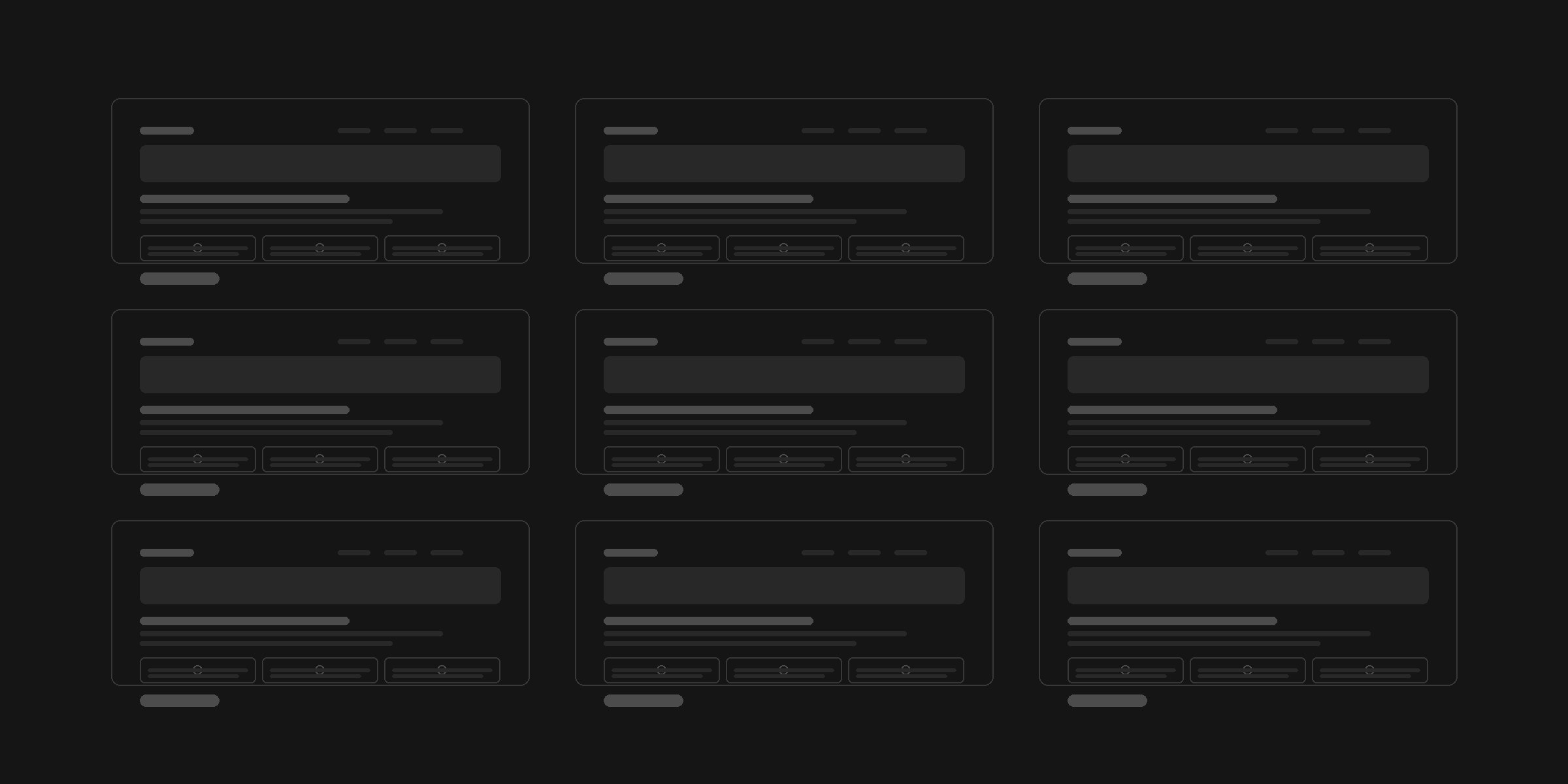
Ask ten different tools for a website for an aesthetics clinic and you will get ten versions of the same site. Soft neutral palette, a hero image of a woman looking serene, three feature boxes with circular icons, a testimonial slider, a footer with social links. It will look fine. It will look like every other clinic site in the country.
That is not a failure of the tool, it is how it works. It has learned what these sites usually look like and it gives you the middle of that distribution. If your business is genuinely interchangeable with your competitors, that is fine. If it is not, your website is now saying that it is.
Design decisions are choices about what matters most. Which single thing should someone see first. What you leave out so the important part has room. Whether your brand is confident enough to use one colour and a lot of space, or whether it needs warmth and detail. Those are judgements about your business, made by someone who has asked you questions. A prompt cannot contain them because you do not know them yet, which is half of what the process is for.
The same goes for a design system. A generated site gives you pages. What it does not give you is a set of rules, one type scale, one spacing rhythm, one way buttons behave, so that the page you add next year still looks like it belongs. Without that, a site drifts. Every new section is a fresh set of decisions, and six months later nothing matches.
A page is not a journey
The second thing that goes missing is structure. Generated sites tend to have the right pages and no route through them. Home, About, Services, Contact, all present, all ending in a link that says Learn more.
A website that earns its keep is built around what you want people to do, and it removes everything that gets in the way of them doing it. That means knowing which page is the destination and which pages exist to push people towards it. It means one clear action per page instead of five competing ones. It means thinking about the person who lands on a service page from a Google search, having never seen your homepage, and making sure that page works entirely on its own.
None of that shows up in a screenshot. It shows up in whether the enquiries arrive.
The weight problem
Generated sites are almost always heavy. Images go in at whatever size they came out of the camera, often several megabytes each, because resizing and converting them is a step nobody was told to take.
On your laptop with fast broadband, you will never notice. On a phone with three bars of signal, a site that takes eight seconds to load is a site most people have already left. Google notices too, and page speed feeds directly into how you rank.
Getting this right is unglamorous work. Export at the size the image is actually displayed, convert to a modern format, lazy load anything below the fold, tell the browser the dimensions in advance so the layout does not jump around while it loads. It takes an hour and nobody ever sees it, which is precisely why it gets skipped.
The invisible SEO layer
Most generated sites have the pages but not the plumbing. Page titles that all say the business name. Meta descriptions left empty, so Google writes its own from whatever text it finds first. Three different headings marked up as the main heading on the same page. No internal links between pages that obviously relate to each other.
Then there is structured data, the hidden code that tells search engines what your business is, where it is, what you sell and what your opening hours are. It is what gets you the extra detail under your listing in search results. A generated site will almost never include it because nothing prompted it to.
Individually these are small. Together they are the difference between a site that quietly accumulates traffic and one that sits there.
Accessibility is not optional
Light grey text on a white background is an aesthetic choice that a lot of tools default to, and it is unreadable for plenty of people. Images without alt text are invisible to screen readers. Forms without labels cannot be filled in without a mouse.
Under the Equality Act you are expected to make reasonable adjustments so disabled people can use your service, and your website counts. Most small businesses are never going to face a claim over this, but that is not really the point. Roughly one in five people in the UK has a disability of some kind, and an inaccessible site is turning away customers it never knows it had.
The legal bits it leaves out
This is where the gap stops being about quality and starts being about rules.
Your company details
If you trade through a limited company, your website has to show your registered company name, the part of the UK you are registered in, your company number and your registered office address. That comes from the Names and Trading Disclosures Regulations 2015, and it applies to your website the same way it applies to your invoices. It does not need to be on every page, and a footer is fine, but it does need to be there. This is the single most common thing missing from a self-built site.
Cookies, and the rules that changed this year
If your site has analytics, advertising pixels or embedded videos, it is storing things on your visitors’ devices, and that is regulated. The rules were rewritten in February 2026 and they now cut both ways. Some low-risk cookies no longer need consent, including first-party analytics used purely for aggregate statistics. But most analytics setups do not qualify out of the box, and anything feeding ad targeting or remarketing still needs proper consent. The penalty changed too. The old cap was £500,000. It is now up to £17.5 million or 4% of worldwide turnover.
Nobody is coming after a one-van business over a missing cookie banner. But a site that fires a tracking pixel the moment someone lands, with nothing asking permission and nothing explaining it, is on the wrong side of a rule that now has real teeth.
A privacy policy written for somewhere else
Ask an AI for a privacy policy and you will get one. Read it properly and it often mentions California residents, cites American legislation and never names who is actually responsible for the data. The moment your contact form collects a name and an email address, people are entitled to know who holds it, what you use it for, how long you keep it and how to complain to the ICO. A policy that answers none of that is worse than none at all, because it looks like the box has been ticked.
Images that belong to somebody else
Placeholder images have a habit of becoming permanent. Stock libraries are very good at finding their own pictures on other people’s websites, and the letter that follows is not a polite request. Every image on your site should be one you shot, one you paid for, or one with a licence you could produce if asked.
Claims you cannot back up
AI copy loves a superlative. Award-winning, trusted by thousands, the best in the area. It writes them because that is what marketing copy usually sounds like, not because it knows whether they are true. UK advertising rules expect claims to be substantiated, including on your own website. Beyond the rules, specific and true beats vague and impressive anyway. Bookings up 20% says more than best in class ever will.
Nobody is looking after it
The last gap is not legal, it is just what happens. A site gets built, it works, and then nothing touches it for two years. Software goes out of date, forms quietly stop sending, contact details go stale, and the business moves on while the website stays exactly where it was.
We see this constantly, and the form is usually the worst of it. A contact form that silently stopped delivering eight months ago is not a website problem, it is months of lost enquiries that nobody knew about.
So what are you actually paying for
Not the pages. You can get pages for nothing now, and pretending otherwise would be daft.
What you are paying for is the judgement about what the site needs to do and the discipline to leave out everything else. A design that belongs to your business rather than to a category. A structure built around the action you want people to take. The unglamorous hour spent on image sizes and page titles and structured data. Compliance that is actually yours rather than generic. And someone who is still there afterwards, watching it, fixing it and improving it, so problems get caught before you notice them.
If you have built something yourself and it is bringing in work, the hard part is done, and it is worth an hour with a checklist rather than starting again. Company details in the footer. A privacy policy for the right country. An honest look at what is tracking your visitors. Licences for your images. Claims you could evidence.
And if you would rather hand the whole thing over, that is what we do. Fixed price, agreed up front, and a site built to keep earning long after it goes live.